
Toy Storage That Lets the Living Room Be a Living Room
Choose accessible bins and realistic toy zones that children can use and adults can reset without sorting every small piece.
Our guides explain practical buying considerations; they do not represent hands-on product tests. The shopping links below are ordinary retailer links and currently do not earn us a commission. How our links work.
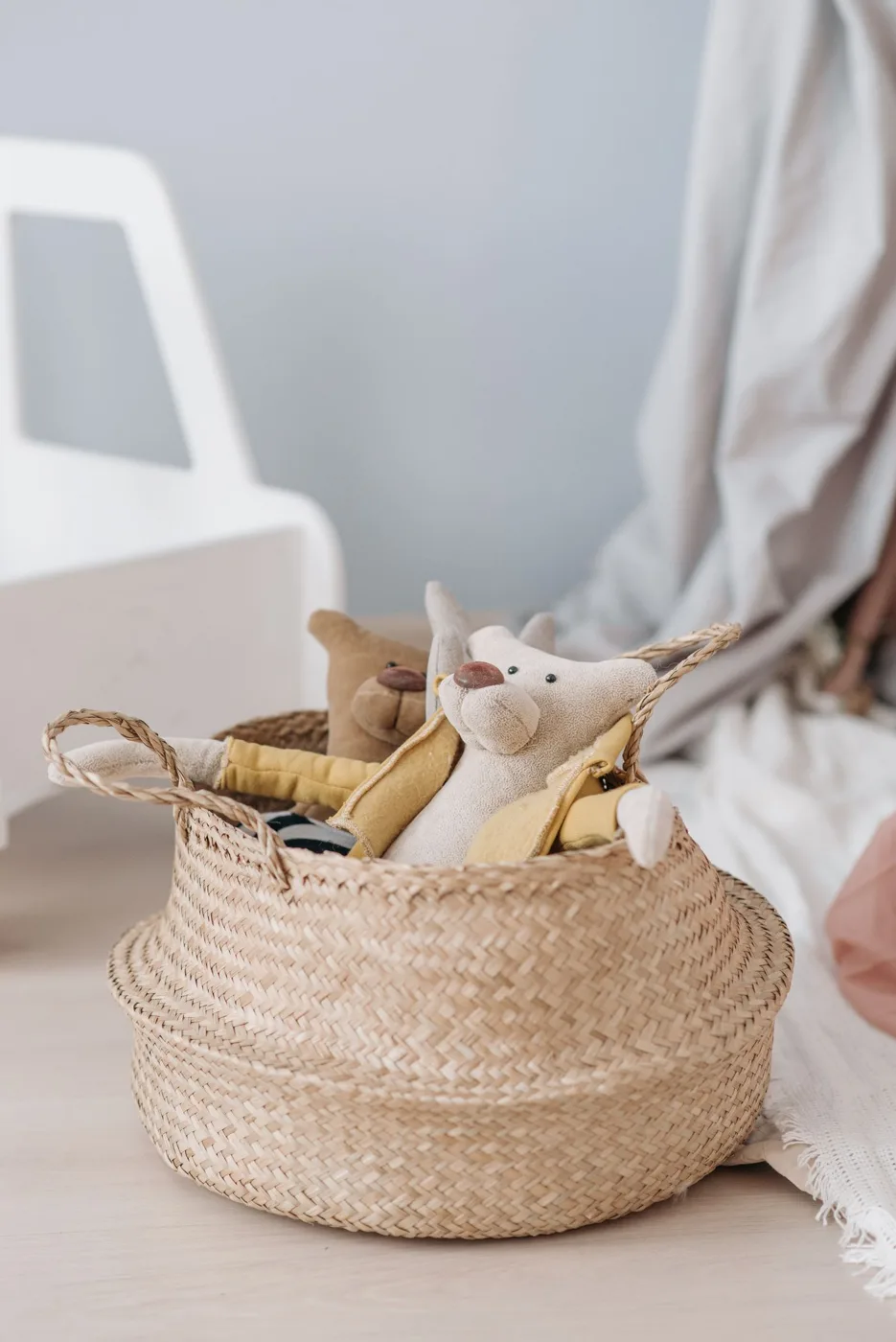
By late afternoon, a living room can hold a block construction, a half-finished puzzle, and several toys nobody remembers taking out. The aim of toy storage is not to erase play. It is to make the next activity possible and keep walking paths usable. A system works better when children can understand it and when cleanup requires a few broad decisions instead of dozens of tiny ones.
Separate active play from stored inventory
Look at the toys used in this room during an ordinary week. Keep those within easy reach and move less-used items to an appropriate secondary location. Rotation can help a crowded room, but only if you can retrieve and exchange the stored toys without creating another complicated task. Start with fewer accessible categories rather than a strict calendar.
Give ongoing projects a defined place. A tray that holds a building project can move off the coffee table at dinner time without dismantling everything. Check that the tray is not too heavy for the intended user and that its edges do not create a hazard. For small parts, follow age guidance and keep them away from children for whom they pose a choking risk.
Open bins, lidded boxes, or cabinets?
| Choice | Helpful for | Tradeoff |
|---|---|---|
| Open floor-level bins | Frequently used large toys | Toys stay visible and can spill if overfilled |
| Small lidded boxes | Sets with many compatible pieces | Adds an opening step and requires appropriate age-safe design |
| Closed cabinet | Shared-room visual calm | Needs safe furniture setup and accessible compartments |
An oversized basket looks simple but tends to bury the favorite item at the bottom. Several smaller categories may work better: building pieces, pretend play, and vehicles, for example. Avoid separating items so narrowly that cleanup requires identifying every miniature accessory. The best label is one the household can consistently follow.
Buy for the child and the room
Look for manageable weight, comfortable handles, and surfaces that can be cleaned according to the manufacturer's instructions. Woven baskets can soften a living room visually, but rough interiors may snag fabric toys and small pieces can hide in the weave. Rigid bins support labels and predictable stacking, although hard corners deserve attention in a busy play area.
Use storage furniture designed and installed appropriately for the household. Follow anchoring requirements, avoid arranging bins like climbing steps, and do not improvise heavy lids on toy boxes. CPSC furniture-anchoring guidance provides useful safety information. A storage system should not encourage a child to climb for a frequently used toy; put that toy lower or have an adult retrieve it.
Make cleanup a visible sequence
Clear the walking path first. Return large toys to their zones, then gather compatible small pieces. Save detailed puzzle checks for a calmer moment. Broad picture labels can help young children, while readable word labels suit older children and shared adult storage. Leave some empty space in each bin so putting things away does not require careful packing.
Keep a small adult-managed holding spot for stray pieces while you identify their sets. It should not become a permanent catchall or a place where unsafe small parts are accessible. During a regular reset, reunite those pieces with their sets and reconsider items that consistently lack a home. If the same toy never fits, the category or container may need changing.
A shared room can still look composed
Choose a limited number of containers that fit existing furniture rather than making every toy invisible. A consistent shelf line or basket material can bring order even when the toys themselves are colorful. Reserve adult surfaces for their intended tasks; if every side table stores toys, the room has exceeded its practical play capacity.
Do not buy a full matching storage wall before observing how the children use the first few bins. Avoid transparent boxes for every object simply because visibility sounds helpful; constant visual inventory can feel busy in a small room. Conversely, opaque storage needs reliable labels. Choose the compromise that makes both retrieval and the room's everyday use easier.
Questions about toy storage
Should children sort by color? Usually only if color is meaningful to the play activity. Sorting by toy type or set tends to make finding the next item easier.
Do I need labels on every bin? Label the categories that become confused. An obvious basket of large stuffed animals may not need one.
What if cleanup still takes too long? Reduce the accessible inventory and simplify categories before buying more storage. Fewer decisions often matter more than additional capacity, especially at the end of a tiring day.
Explore your options
Use these retailer collections to compare current choices. Check the exact dimensions, materials, care instructions, delivery costs, and return terms before ordering.
Low storage units and bins
Consider it for: Compare accessible bins for broad toy categories children can recognize.
Keep in mind: Follow furniture anchoring instructions and avoid inviting climbing.
Browse retailer options ↗Small toy bins and project trays
Consider it for: Browse small bins and trays for sets or ongoing play projects.
Keep in mind: Tiny compartments can make everyday cleanup more complicated.
Browse retailer options ↗Sources & further reading
- IKEA storage and organization range
- Target storage and organization range
- CPSC: Anchor It furniture safety
Editorial information and linked destinations reviewed October 6, 2026. Product ranges and specifications can change. Send a correction or a question.
A little more inspiration
More Organization ↗
A Small Entryway That Handles the Everyday Drop
Build a workable landing spot for shoes, keys, bags, and incoming mail without giving up the hallway.
4 MIN READ
Pantry Bins or Matching Canisters? Choose by How You Cook
Decide what deserves a canister, what should stay in its original package, and how to make pantry space easier to use.
4 MIN READ
Under-Sink Storage That Works Around the Plumbing
Choose caddies, adjustable shelves, and compact bins without blocking shutoff valves or hiding leaks.
4 MIN READ