
The Cutting Board That Fits Your Kitchen and Your Routine
Choose a prep board around usable space, washing, knife care, and the food you cook.
Our guides explain practical buying considerations; they do not represent hands-on product tests. The shopping links below are ordinary retailer links and currently do not earn us a commission. How our links work.
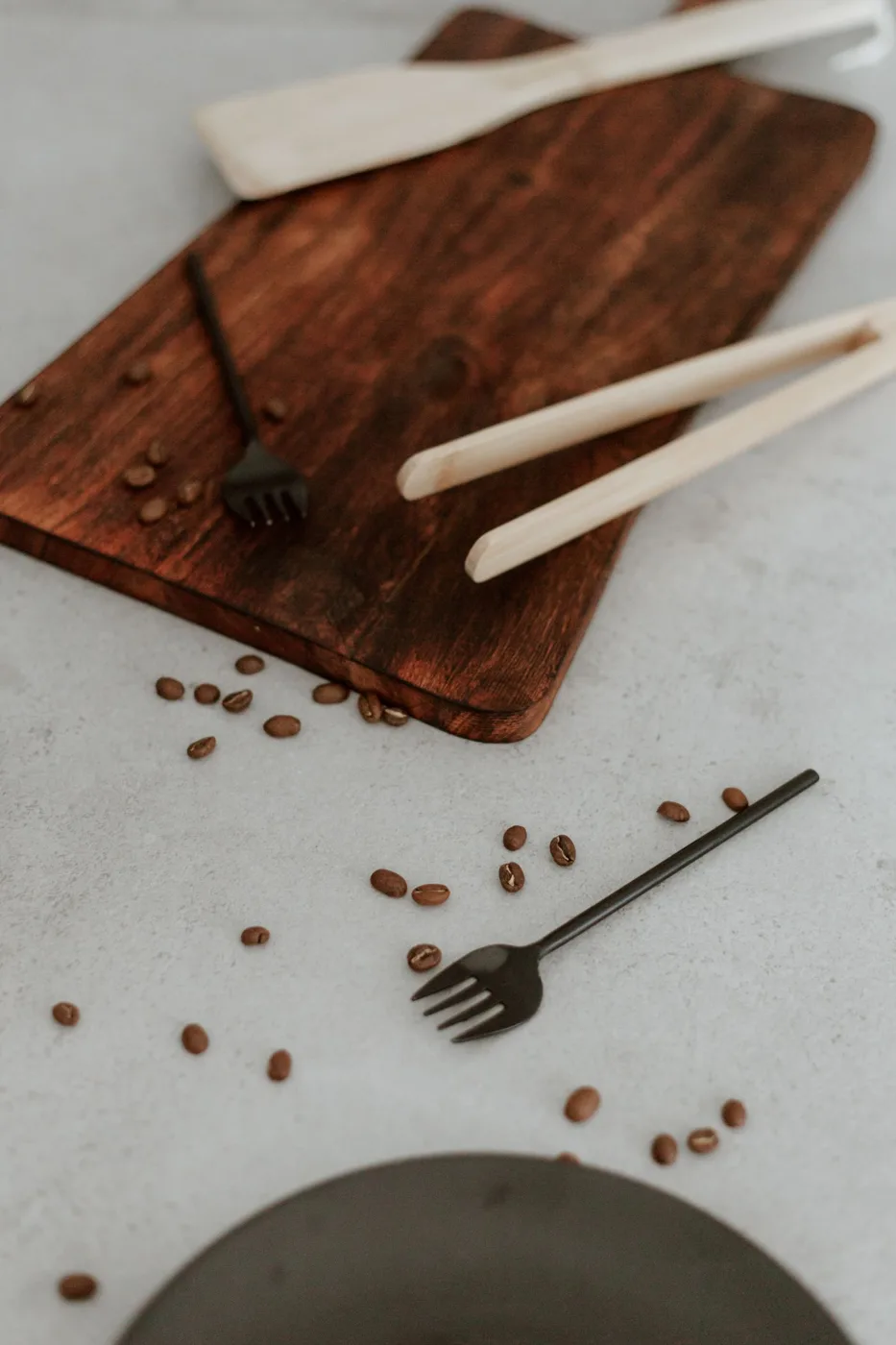
A cutting board can be too small while you are chopping and too large when you try to wash it. That tension matters more than a styled photograph of a board leaning against a backsplash. The useful size is the one that gives food room to move, sits securely on your counter, and can be cleaned properly in your actual sink. Start with those three tests before choosing a wood grain or color.
Map a real prep session
Think about a meal you make often. If it begins with an onion, two peppers, and a pile of greens, a tiny board will force repeated transfers and crowd the knife. If you mainly slice fruit or prepare one sandwich, a large butcher-block style board may create unnecessary washing and storage work. More surface is helpful only when you can handle it comfortably.
Measure the available counter depth and the space beside the board for a bowl or plate. The full workflow needs somewhere for trimmed food and scraps. A board that occupies every clear inch can make prep less efficient despite its generous dimensions. Keep it away from an unstable edge or a place where water regularly pools.
Choose material with care in mind
Wood and plastic boards can both have a place in a home kitchen when used and maintained appropriately. The right choice depends on the product's construction, your cleaning routine, and the foods being prepared. Follow the board manufacturer's care directions and current food-safety guidance for cleaning and avoiding cross-contamination.
Glass and stone boards may be appealing as serving surfaces, but they are generally poor everyday chopping choices for knife edges. Do not buy a hard decorative surface simply because it looks easy to wipe. The board and knife work as a pair, and a surface that feels punishing to the blade can make the whole prep routine less pleasant.
| Kitchen condition | Useful feature | Tradeoff |
|---|---|---|
| Small sink | Manageable dimensions and weight | Less room for large prep batches |
| Frequent wet ingredients | A design that contains some liquid | Grooves reduce flat chopping area |
| Limited storage | A board that fits upright or flat safely | Very thin boards may flex |
| Several food types in one meal | A clear separation and cleaning plan | Additional boards need storage |
Stability comes before styling
A board that slides while cutting needs attention before use. Check for a flat base, secure feet if supplied, and compatibility with your counter. Some cooks use a suitable damp cloth underneath a plain board, but follow product guidance and keep the setup stable and clean. Do not continue using a warped board that rocks unpredictably.
Handles and hanging holes can help with carrying and storage, yet they reduce usable surface. A juice groove can be helpful when carving, but it is not automatically necessary for chopping vegetables. Compare the flat center area, not just the outer dimensions. Decorative paddle shapes may be better suited to serving than substantial prep.
Plan drying and storage
A board should have a place to dry fully according to its care instructions. Leaving it flat on a damp counter or tightly enclosed while wet can undermine the care routine. Wood boards may require periodic conditioning with an appropriate product; check the maker's directions rather than applying household oils at random.
Inspect boards for damage that makes cleaning difficult. Deep grooves, cracks, or separating layers can be a reason to replace a board. No material deserves indefinite use just because it was expensive. The condition of the actual surface matters more than an abstract claim that one material is always superior.
Build a small, useful collection
One medium everyday board and a second board for a distinct task may be enough. A separate plan for raw meat and ready-to-eat foods can reduce confusion during busy prep. Color coding can help a household remember the system, but it does not replace cleaning. Choose a system everyone understands rather than a complicated set nobody follows.
Skip oversized boards that cannot fit the sink, and skip novelty shapes that leave no room for the food you usually prepare. Spend on a stable, maintainable surface and a size you will use repeatedly.
Does a thicker board always last longer?
Thickness is only one factor. Construction, care, moisture exposure, and how the board is stored all matter. A heavy board can be less convenient if you must move it after every meal.
Should I buy a matching knife set?
Not automatically. A comfortable knife suited to your prep is more useful than a full coordinated collection. Check how the knife feels in your hand and how you will maintain and store it safely.
Explore your options
Use these retailer collections to compare current choices. Check the exact dimensions, materials, care instructions, delivery costs, and return terms before ordering.
Browse cutting boards
Consider it for: Compare usable prep area against your sink and storage dimensions.
Keep in mind: Large boards can be difficult to wash and dry.
Browse retailer options ↗Browse kitchen knives
Consider it for: Choose a manageable everyday knife to pair with the board.
Keep in mind: A full knife set can add tools you rarely use.
Browse retailer options ↗Sources & further reading
Editorial information and linked destinations reviewed October 6, 2026. Product ranges and specifications can change. Send a correction or a question.
A little more inspiration
More Kitchen ↗
Choose an Everyday Skillet Around What You Cook
Compare stainless steel, cast iron, and nonstick for weeknight meals, cleanup, and storage.
4 MIN READ
Food Containers That Make Leftovers Easier to Use
Build a manageable storage collection around portions, visible food, lids, and the way you reheat.
4 MIN READ
The Sheet Pan You Will Use for More Than Cookies
Choose a baking sheet around oven fit, weeknight dinners, browning, and manageable cleanup.
4 MIN READ