
Coffee Table or Ottoman? Choose for Your Real Evening Routine
Compare firm surfaces, soft footrests, storage, and floor space before choosing the center of your living room.
Our guides explain practical buying considerations; they do not represent hands-on product tests. The shopping links below are ordinary retailer links and currently do not earn us a commission. How our links work.
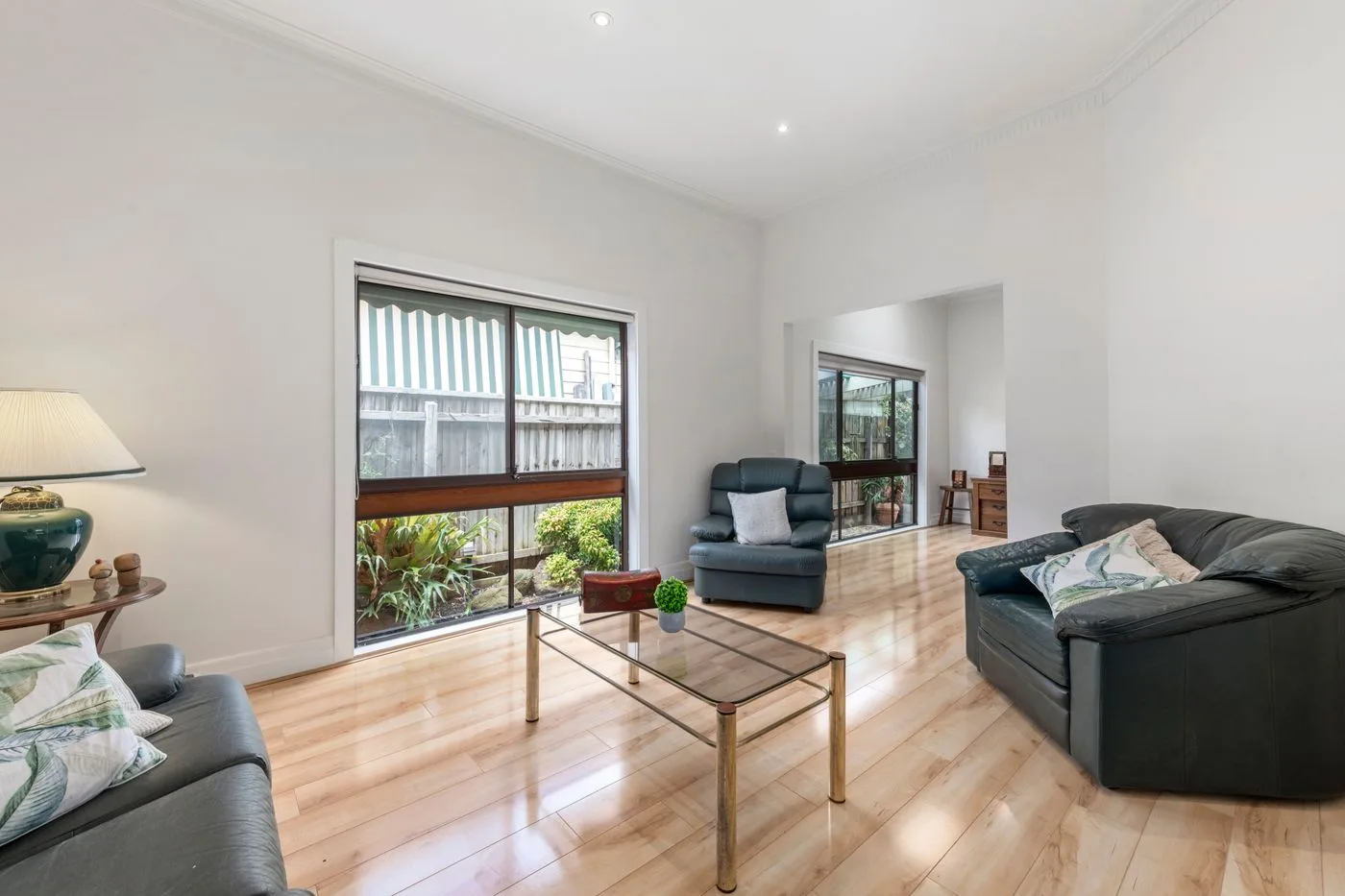
A coffee table and an ottoman may occupy the same patch of floor, but they solve different problems. One offers a dependable surface for drinks, games, and work. The other can support feet, soften the center of the room, and sometimes provide occasional seating when designed for it. The best choice starts with what happens in front of your sofa most evenings, not with which one looks more fashionable.
Choose the primary job first
If the living room doubles as a place for puzzles, casual meals, or a laptop, a firm table is usually the clearer starting point. If everyone settles in with feet raised and drinks stay on side tables, an ottoman may fit better. A tray can make an upholstered surface more versatile, but it does not turn soft padding into a completely stable tabletop.
List the three objects that spend the most time in front of your sofa. Then decide where each will go. This small exercise exposes whether a proposed ottoman needs a permanent tray, whether a coffee table needs closed storage, or whether you really need a smaller side table instead of a large central piece.
Compare the tradeoffs plainly
| Daily priority | Coffee table | Ottoman |
|---|---|---|
| Drinks and plates | A firm surface is convenient | Requires a suitable stable tray or another surface |
| Feet up | Hard edges may be uncomfortable | Upholstery can be more comfortable |
| Board games | Broad, level tops are useful | Soft or tufted tops can be awkward |
| Flexible extra seat | Only if explicitly designed for sitting | Only if the product is rated for seating |
| Cleaning spills | Depends on finish and material | Depends on upholstery and removable covers |
Neither category is automatically safer or easier to maintain. A table may have rounded edges; an ottoman may have hard legs, hinges, or a heavy lid. Assess the actual design and the people using the room. Do not sit or stand on furniture that is not intended for that purpose.
Measure the working space, not just the top
Tape the footprint between the sofa and the route through the room. Sit down, stand up, and walk around it while carrying a mug. Reach toward the proposed top. A low table can look elegant yet require an awkward bend, while a tall ottoman may place your legs at an uncomfortable angle.
If the piece includes storage, test the clearance needed to open it. A drawer can collide with the sofa, and a hinged lid may require everything on top to be removed. Check the mechanism and any safety guidance. Storage is only useful when accessing it fits the room's routine.
Materials change daily maintenance
For a table, read the care requirements of the exact finish. Wood veneer, solid wood, stone, glass, and painted surfaces each have different vulnerabilities. Coasters may still be sensible even if a surface looks durable. Glass can visually lighten a room but shows fingerprints and reflects light. A heavily textured top may be less convenient for writing or balancing a narrow glass.
For an ottoman, examine the upholstery, seams, and cover care. A removable cover may still require professional cleaning. Tufting can collect crumbs, while a smooth top may be easier to brush off. If shoes regularly end up on the furniture, be honest about that habit before choosing a pale delicate fabric.
Consider a smaller combination
You do not always need one large object. A modest footstool with a side table may support the same routine while preserving circulation. Nesting tables can expand for guests, but they require somewhere to sit when separated. Movable pieces should be stable enough that flexibility does not come at the expense of everyday confidence.
Avoid buying both a large table and a large ottoman unless the room genuinely accommodates them. Too much furniture at the center can make every trip to the sofa awkward. Use existing pieces to rehearse the arrangement before placing an order.
Where the money is best spent
Prioritize stability, useful dimensions, and a surface or fabric you are willing to maintain. A complicated lifting mechanism or hidden compartment is worthwhile only if it solves a frequent need. Skip novelty features that make a simple action harder, such as clearing the entire top to retrieve a remote.
Can an ottoman work in a small room?
Yes, when it replaces something rather than adding another obstacle. Compare its overall volume and the need for a separate drink surface. A compact ottoman plus a side table may work better than one oversized piece.
Should the height match the sofa seat?
Use the intended activity as your guide and follow product guidance. A footrest should feel comfortable for your legs; a table should be reachable from the seat. Test comparable heights at home instead of relying on a universal styling rule.
Explore your options
Use these retailer collections to compare current choices. Check the exact dimensions, materials, care instructions, delivery costs, and return terms before ordering.
Browse coffee tables
Consider it for: Compare usable top area, height, and opening clearance.
Keep in mind: Large tops can reduce circulation in a compact room.
Browse retailer options ↗Browse seating and related options
Consider it for: Compare how a central piece relates to your sofa’s seat height and depth.
Keep in mind: Coordinated furniture is not automatically the best fit.
Browse retailer options ↗Sources & further reading
Editorial information and linked destinations reviewed October 6, 2026. Product ranges and specifications can change. Send a correction or a question.
A little more inspiration
More Home ↗
A Small Living Room That Works Beyond the Photo
Make room for conversation, a cup of coffee, and the path to the kitchen with a practical small-room furniture plan.
4 MIN READ
Choose a Living Room Rug You Can Actually Live With
A guide to rug size, pile, pattern, and care for households with crumbs, pets, and everyday traffic.
4 MIN READ
Curtains That Welcome Daylight and Give You Privacy
Plan a window treatment around morning light, evening privacy, hardware, and everyday opening.
4 MIN READ